UK Buying Guides
Best Musical Instruments in the UK
17 expert guides — updated for 2026
Learning an instrument in the UK typically means working towards ABRSM or Rockschool grades, so we research instruments with those practical milestone exams in mind. Acoustic guitars, keyboards, ukuleles, electronic drum kits and bass guitars all have strong beginner options available on Amazon UK at prices well below the high street, and our guides cover which entry models will last through the early grades versus which need replacing once technique improves. UK flat and terraced house living makes noise levels a real consideration — electronic drum kits in particular vary enormously in mesh head quality and module damping. Typical spends: £50 to £150 for beginner ukuleles and guitars, £80 to £250 for quality keyboards, £150 to £400 for electronic drum kits. The most common mistake is buying a beginner instrument so poor it makes correct technique impossible, then blaming the learner rather than the gear.
Acoustic Guitars
Best Acoustic Guitars UK 2026
Acoustic guitars remain the most popular starting instrument in the UK, and it's easy to see why. They need no amplifier, travel well on trains and buses, and suit everything from folk and Britpop to classical fingerpicking. Whether your child is starting ABRSM Grade 1 lessons at a local music centre or you're an adult picking up the guitar for the first time after years of thinking about it, the right entry-level acoustic makes an enormous difference to whether you stick with it or give up after a month. The UK market has a few quirks worth knowing. UK humidity is generally lower than tropical countries but winter central heating creates very dry indoor environments — this matters because solid-top guitars can crack if the humidity drops below 40%. Most beginner guitars use laminate tops precisely because they are more resistant to these swings, making them a practical choice for unheated spare bedrooms or school practice rooms. Prices on Amazon UK shift with exchange rates from month to month; our rankings focus on value-for-quality rather than a fixed price snapshot. For ABRSM grade work, examiners do not specify instruments, but teachers consistently recommend guitars with low action (the distance between string and fretboard) because sore fingertips are the number one reason beginners quit. The guitars below have all been selected with playability front of mind — not just the prettiest finish or the brand name on the headstock. We've included a range so there's a genuine option for every budget, from a first Christmas gift to a serious step-up instrument.
 5 picks
Audio Interface
Best Audio Interface UK 2026
Focusrite was founded in Oxford in 1985, and its flagship product line, the Scarlett series, is a fixture of the UK home studio market — straightforward to operate and bundled with usable software. The fact that Focusrite is a British company is worth noting: the company's UK headquarters means UK customer service, UK warranty support, and a product designed with European mains standards and UK studio practices in mind from the ground up. An audio interface is the device that converts analogue audio signals (from a microphone, guitar, or keyboard) into digital data that a computer can record and process. Without an audio interface, recording a microphone or instrument directly into a Mac or PC produces audio at consumer quality (typically 16-bit/44.1kHz) with high latency — the delay between playing and hearing the result through the computer. A dedicated audio interface records at 24-bit/96kHz (the UK broadcast standard used by the BBC for digital production) and reduces latency to 2–6 milliseconds, which is below the threshold of human perception for monitoring. The UK home studio landscape is split roughly evenly between Mac users running Logic Pro (Apple's professional DAW, exclusive to Mac) and Windows/Mac users running either FL Studio or Ableton Live. All three DAWs are fully compatible with every audio interface on this list via standard ASIO (Windows) and Core Audio (Mac) drivers. Bus-powered interfaces (those that draw power entirely from the USB connection without a mains adapter) are particularly popular in UK home setups where power outlets near a desk are limited — the Scarlett 2i2, Volt 2, and AudioBox USB 96 are all bus-powered.
 5 picks
Bass Guitars
Best Bass Guitars UK 2026
The bass guitar is the backbone of virtually every genre popular in the UK — from the driving Motown-influenced bass lines of Britpop and indie rock to the syncopated grooves of UK garage, grime, and drum & bass. Despite being essential to band music, the bass is chronically undersupplied with players, which means a competent UK bassist has genuine opportunities to join bands, play session work, and find paid gigging sooner than a guitarist or drummer might expect. If you're thinking about bass as a strategic instrument choice, the supply-demand dynamics in the UK are genuinely favourable. For beginners, the most important purchasing decision is not which brand to buy but whether to buy a setup package (instrument, amp, lead, strap) or the instrument alone. UK beginners are often tempted by cheap complete packs, but the amplifiers included are frequently so poor that they actually hinder progress by making the instrument sound unpleasant regardless of how well you play. Our advice: buy the best instrument your budget allows, then add a Fender Frontman 10B or Orange Crush Bass 25 separately. You'll spend slightly more but have a setup that sounds good and motivates practice. The UK bass guitar market is dominated by Squier (Fender's budget line), Yamaha, and Ibanez at the beginner and lower-intermediate level — all three brands have established reputations with UK music teachers. For the serious student working towards Rockschool bass grades (which UK schools increasingly offer as GCSE coursework alternatives), a reliable instrument with good intonation across all 20+ frets is essential. The five basses below have all been selected with that standard in mind.
 5 picks
Cajon
Best Cajon UK 2026
The cajon (pronounced ka-HON) is a Peruvian box drum that has found a strong home in the UK across flamenco communities, folk sessions, pub acoustic gigs, and school percussion programmes. Its appeal in a UK context is practical: it produces a full range of bass and snare sounds without requiring a drum kit, making it ideal for flat and terraced house living where a standard acoustic drum kit would immediately trigger complaints from neighbours. A cajon played with reasonable technique produces sound levels comparable to an acoustic guitar rather than a drum kit — enough for home practice and small venue performance. The key internal mechanism that distinguishes a modern cajon from a basic wooden box is the snare effect system. Steel guitar strings or snare wires are stretched diagonally inside the instrument, touching the playing surface (called the 'tapa' or front plate). When the tapa is struck near the top edge, the snare vibration produces a characteristic crisp, rattling overtone similar to a snare drum. The tension of these internal cables is user-adjustable on some models, letting the player dial between a tight, crispy snare effect and a loose, buzzy flutter; others, including our top pick, use fixed wires set at the factory. The UK has a healthy network of cajon players across multiple scenes: London's flamenco community around venues like Sadler's Wells, the acoustic folk circuit that runs from Brighton to Edinburgh, and an emerging world music presence in school percussion programmes introduced by Wider Opportunities schemes. For busking — which requires a licence in most UK city centres but is popular on Oxford Street, Brighton seafront, and Edinburgh's Royal Mile — the cajon is ideal as it sits flat, provides its own seat, and requires no amplification for street-level volumes.
 4 picks
Condenser Microphone
Best Condenser Microphone UK 2026
The UK has seen a significant expansion in home recording, podcasting, and content creation over the past five years, driven by the rise of platforms such as Spotify Podcasts, YouTube, and Patreon, as well as the post-2020 shift to remote working that gave millions of UK professionals a home office where audio quality suddenly mattered. A condenser microphone is the tool of choice for this range of applications — condenser mics are more sensitive and detailed than the dynamic mics used for live stage performance, making them ideal for capturing vocals, acoustic instruments, and spoken word in the controlled environment of a home studio or podcast desk. For UK buyers, the most important initial decision is USB versus XLR connectivity. A USB microphone (like the Blue Yeti or Rode NT-USB+) connects directly to a Mac or PC with no additional equipment — it is a complete solution for podcasting, voiceover, and streaming. An XLR microphone (like the AKG P120) requires an audio interface (a separate device that converts the analogue XLR signal to a digital USB signal for the computer) but offers higher audio quality, lower noise floor, and compatibility with professional recording equipment. For beginners, USB is the practical starting point; for musicians recording instruments or wanting to grow into professional audio production, XLR with an audio interface is the better long-term investment. A consideration specific to UK homes is acoustic treatment. British houses are typically reflective — hard plaster walls, wooden floors, and rectangular rooms create reverb that condenser microphones (being highly sensitive) will capture clearly. A duvet, heavy curtains, or a dedicated recording reflection filter (available from £25–£50) will dramatically improve home recordings before any microphone upgrade becomes worthwhile. The best microphone in the world sounds poor in an untreated Victorian terraced living room.
 5 picks
Digital Piano
Best Digital Piano UK 2026
A digital piano is the practical answer to learning acoustic piano in the UK, where the combination of terraced houses, shared walls, and thin floors makes a full upright piano a neighbourly impossibility for most households. The critical technical requirement is graded weighted hammer action — a mechanism that gives each key a heavier resistance in the lower registers (bass) and lighter resistance in the higher registers (treble), mimicking the physical response of an acoustic piano's hammer-and-string mechanism. Without weighted keys, a student develops the wrong finger strength and control, which becomes a serious handicap when they eventually sit at an acoustic piano for ABRSM grades or music service rehearsals. Semi-weighted keys (common on keyboards under £200) are not an adequate substitute for piano study. For ABRSM Piano examinations from Grade 1 upwards, the technical requirements around dynamic control, touch sensitivity, and legato phrasing all assume a properly weighted instrument. The examination itself must typically be taken on an acoustic piano or a well-specified digital piano (check with your local ABRSM centre), but daily practice on a well-weighted digital develops the appropriate technique. The Yamaha P-45, Roland FP-30X, and Kawai ES120 are the three most commonly recommended instruments by UK piano teachers for Grade 1–5 work. Living in a UK flat or a semi-detached house means the headphone output is not a luxury — it is the feature that makes instrument ownership viable. All five pianos in our list offer a headphone output for completely silent practice, essential for morning or late-evening sessions without disturbing neighbours. Bluetooth MIDI connectivity (present on the Roland FP-30X and Casio PX-S3100) allows the piano to connect wirelessly to apps like Simply Piano or Flowkey, which are increasingly used alongside formal ABRSM lessons in UK households.
 5 picks
DJ Controllers
Best DJ Controllers in the UK 2026
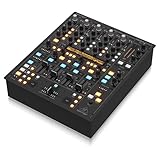
DJ controllers have become essential equipment for anyone serious about mixing music. Whether you're a bedroom DJ starting out or a professional looking for a high-end mixer, the UK market offers excellent options from trusted brands like Pioneer, Numark, Technics, and Roland. Modern controllers range from compact two-channel units perfect for small venues to professional eight-channel systems used in clubs and festivals. When shopping on Amazon UK, you'll find controllers that support popular software like Serato, Rekordbox, and Traktor, often with comprehensive integration out of the box. UK buyers benefit from strong consumer protections under the Consumer Rights Act 2015, ensuring you can purchase with confidence knowing returns and warranty coverage are protected. This guide highlights the best DJ controllers currently available on Amazon UK, with options across budget ranges and skill levels to suit every mixing style.
 5 picks
Djembe
Best Djembe UK 2026
The djembe is a West African drum originating from the Mandé people of Guinea, Senegal, and Mali, and it has found a vibrant community in the UK through three distinct pathways: school world music programmes, community drumming circles, and the West African diaspora. UK secondary schools increasingly include djembe in GCSE and A-Level Music world music units, and the instrument is a staple of the Wider Opportunities percussion programme that reaches primary school children across England. Most significantly, the UK has one of the most active djembe circle communities outside West Africa itself, with regular drumming sessions in cities including London, Manchester, Bristol, Leeds, and Edinburgh, often run through community arts organisations and world music centres. The djembe's construction determines its sound character and maintenance requirements in the UK climate. Traditional goatskin-headed djembes produce a warmer, more complex tone with greater dynamic range between the bass, tone, and slap sounds — but goatskin requires careful maintenance in the UK's variable humidity. In wet winters, goatskin can stretch and lose tuning tension; in dry summers with central heating, it can become overly tight and risk splitting. Synthetic heads (typically made from Remo's Fiberskyn or similar synthetic materials) are far more climate-resilient and are recommended for UK school use and outdoor drumming where weather exposure is a factor. Professional djembe players and those playing in African music ensembles will generally prefer authentic goatskin despite the additional care requirements. Rope tuning is the traditional method for adjusting djembe head tension — a complex process involving weaving patterns of vertical and horizontal ropes that requires practice to execute correctly. Most entry-level djembes arrive pre-tuned at a factory tension. UK beginners rarely need to re-tune for the first 6–12 months of playing, but learning the Mali weave tuning technique is an important skill for any player who wants to participate in community circle settings where drums are frequently adjusted between sessions.
 5 picks
Electric Guitar
Best Electric Guitar UK 2026
The electric guitar is central to British music culture in a way few countries can match — from the Kinks and the Beatles defining rock 'n' roll in the 1960s to Blur and Oasis pioneering Britpop in the 1990s, to current acts like Arctic Monkeys and Wolf Alice. Buying a first electric guitar in the UK means navigating this history alongside practical considerations: which body style, which pickup configuration, and critically, what amp to pair it with, since an electric guitar without an amplifier produces almost no sound. The two dominant pickup philosophies remain single-coil and humbucker. Single-coil pickups (standard on Fender Stratocasters and Telecasters) produce a bright, clear, slightly trebly tone with a characteristic 50-cycle hum in some environments — they are associated with clean Britpop tones (Think Blur's 'Song 2' intro), country picking, and vintage rock. Humbucker pickups (standard on Gibson Les Pauls and Epiphone alternatives) produce a thicker, warmer tone with more sustain and no hum — associated with classic rock and indie sounds from the UK heavy end of the spectrum. For a beginner, this choice often comes down to which British artists they most want to sound like. For grade examinations, both Rockschool and ABRSM offer electric guitar syllabi. Rockschool (which is the more popular examination board for electric guitar in UK schools and music colleges) runs from Debut Grade through Grade 8 and allows electric guitar for all examinations. ABRSM also offers electric guitar grades and is more commonly accepted by UK sixth-form colleges and conservatoires. Both syllabi assess technique, performance, musicianship, and supporting tests. A beginner guitar from Squier or Epiphone will comfortably support Rockschool Debut through Grade 3 without needing an upgrade.
 5 picks
Electronic Drum Kits
Best Electronic Drum Kits UK 2026
Electronic drum kits have become the only realistic option for aspiring drummers living in the UK's typically dense housing stock. In a terrace, semi-detached, or block of flats — which describes the overwhelming majority of UK housing — an acoustic kit is simply incompatible with everyday life. Even the quietest mesh electronic kit will generate some impact noise through the floor, but played through headphones with riser pads under the rack, an electronic kit is genuinely manageable for most UK homes. Understanding the difference between mesh and rubber pads is the most critical buying decision: rubber pads are louder and less responsive; mesh pads are significantly quieter and more closely replicate the rebound feel of acoustic drum heads. For UK learners, electronic kits also offer practical advantages beyond noise control. Built-in drum modules typically include metronome functions, play-along tracks, and coaching modes that accelerate progress without the need for expensive lessons early on. Most mid-range kits also support recording via USB MIDI, which is increasingly relevant as music technology (Edexcel and AQA GCSE and A-Level components) requires students to demonstrate recording skills. Many UK secondary schools now have electronic drum practice rooms equipped with kits very similar to those in our list. Our list spans from the entry-level Roland TD-02K up to the more advanced ATV EXS-3, giving a clear upgrade path for UK drummers at every stage. We've assessed each kit specifically against the realities of UK home living: floor noise, headphone quality, footprint size for smaller rooms, and the quality of the kick pedal — which transmits the most vibration through floors in typical UK terrace construction.
Flute for Beginners
Best Flute for Beginners UK 2026
The flute is one of the most popular instruments in UK secondary school orchestras and county youth ensembles, and starting on the right student instrument makes a significant difference to how quickly a beginner progresses toward their first ABRSM grade. The ABRSM flute syllabus runs from Initial Grade through Grade 8, with Grade 1 requiring three pieces, scales and arpeggios, sight-reading, and aural tests — all achievable within 12–18 months of solid practice on a quality student instrument. Unlike some instruments, where an entry-level model is substantially penalised in grade examinations, a well-made student flute from Yamaha, Trevor James, or Pearl will comfortably support a candidate through the lower grades without embarrassment. The most important decision for UK buyers is the headjoint: nickel-plated headjoints are standard on budget instruments and are perfectly acceptable for beginners, but silver-plated or sterling silver headjoints produce a noticeably warmer tone that becomes relevant from Grade 4 onwards. Closed-hole (plateau) keys are standard on all beginner flutes and are recommended for new players as they require less precise finger placement — open-hole (French) keys require each finger to cover a hole precisely and are typically introduced as a player advances. Many UK music teachers recommend a curved headjoint option for younger players (under 10) because it reduces the reach required to hold the flute horizontally, preventing poor posture that can lead to repetitive strain issues. For parents considering whether to buy or hire, many UK local music services (formerly County Music Services) offer instrument hire schemes at around £12–£20 per month — a sensible first step before committing to a purchase. However, for pupils who have already started lessons and shown commitment, purchasing a flute in the £165–£300 range typically represents better value from month six onwards. The instruments ranked below represent the best options across the beginner-to-early-intermediate range.
 5 picks
Keyboards for Beginners
Best Keyboards for Beginners UK 2026
Learning keyboard or piano is one of the most popular musical pursuits in the UK, driven in part by the widespread adoption of ABRSM and Trinity grades in British primary and secondary schools. Unlike a guitar or ukulele, a keyboard purchase involves a set of technical trade-offs that can dramatically affect how quickly a beginner progresses — and the biggest of these is whether the keys are weighted and touch-sensitive. Weighted keys mimic the feel of an acoustic piano, where pressing harder produces a louder note. This matters enormously for anyone planning to sit ABRSM practical exams, because pianists who learn on unweighted or semi-weighted keys often struggle with dynamics, touch, and expression when they eventually sit at a real upright or grand piano in an examination hall. UK music teachers are almost unanimous on this point: if your budget stretches to it, buy fully weighted keys. The Yamaha P-45 on our list is the definitive step-up instrument for serious grade candidates. For UK homes, space and noise are practical constraints that matter just as much as musicality. Most London and urban UK flats have thin walls and noise-sensitive neighbours, making headphone connectivity essential — every keyboard on this list includes a headphone socket. Key count is another consideration: 61 keys is adequate for beginner grades, but ABRSM Grade 5 pieces and above often use the full 88-key range, so players who are serious about long-term progress should consider an 88-key instrument from the outset.
Recorder
Best Recorder UK 2026
The recorder holds a unique place in UK music education: it is the only instrument required by the Key Stage 2 national curriculum for pupils aged 7–11 in England and Wales, making it the first instrument millions of British children ever play. Most primary schools issue or request a descant recorder in C, and the standard has been entrenched since the 1950s when the Dolmetsch family helped popularise the instrument in schools. For parents buying for the first time, the vocabulary can be confusing — a descant recorder is the same as a soprano recorder, and the term varies by country, but in UK schools and ABRSM grade syllabi, 'descant' is the accepted name. Material is the biggest purchasing decision. ABS plastic recorders dominate the school market because they are washable, durable, and largely unaffected by temperature changes — important in cold UK classrooms. Wooden recorders, typically maple or pear, produce a noticeably warmer tone and are preferred for ABRSM Grade 3 and above, but require careful drying after each session to prevent moisture damage. For a child just starting Key Stage 2, plastic is almost always the right choice. The price difference is stark: a reliable plastic descant costs £6–£15, while entry-level wooden instruments start around £35–£55. For ABRSM Recorder examinations (available at Initial through Grade 8), the instrument must be a descant in C for the lower grades. Tone quality, articulation clarity, and breath control are all assessed from Grade 1 upwards, making it worth investing in a German-fingering instrument with good keywork — the difference between a basic school recorder and a Yamaha or Aulos becomes obvious quickly. Our picks below cover the full range from classroom basics to the first serious step up for a pupil working toward their first ABRSM grade exam.
Saxophones for Beginners
Best Saxophones for Beginners in the UK 2026
Learning saxophone is an exciting journey, and the right first instrument makes a real difference to how quickly good technique develops. In the UK, several student saxophones are readily available through Amazon and specialist music retailers. Yamaha's student line is the long-standing default recommendation for beginners, while Jupiter, Buffet Crampon and Eastman sit closer to intermediate territory in build and key work. Most beginners start on alto: it is the lightest of the common sizes, needs less air than a tenor or baritone, and is the size most school ensembles are set up for. The main thing to avoid is an unbranded marketplace instrument — leaking pads and unstable intonation make early progress far harder than it needs to be, and correcting them can cost more than the saxophone is worth. This guide covers beginner-friendly saxophones sold in the UK, compared on build, key action, intonation design and what actually comes in the case.
Ukuleles
Best Ukuleles UK 2026
The ukulele has enjoyed a remarkable resurgence in the UK over the past decade, driven in part by its inclusion in the UK primary school curriculum and the popularity of artists like Grace VanderWaal and Jake Shimabukuro reaching British audiences through social media. Unlike many instruments, a decent ukulele can be bought very cheaply, making it one of the most accessible first instruments for both children and adults in the UK — and crucially, one that doesn't require an expensive teacher or years of frustrating practice before producing a pleasant sound. For UK buyers, understanding size is the most important first decision. Soprano ukuleles (the smallest, most traditional size) produce the classic bright, jangly sound most people associate with the instrument, but their short scale length (around 330mm) can feel cramped for adults with larger hands. Concert ukuleles offer a slightly longer neck and fuller sound, making them the most popular all-rounder for UK learners. Tenor ukuleles have an even longer scale and richer bass response, favoured by more experienced players and those who also play guitar. All four instruments are tuned to G-C-E-A (though soprano and concert ukes are sometimes tuned to the same pitch; tenor tuning may be transposed). The UK has a vibrant ukulele community, with active groups in cities including London, Manchester, Birmingham, and Bristol. Many UK primary schools now teach ukulele as part of the Wider Opportunities music programme, and Trinity and ABRSM both offer ukulele grade examinations. Whether you're buying for a child starting school lessons, a commuter wanting a portable practice instrument, or an adult looking for a sociable hobby, the five ukuleles below represent the best options.
Violin for Beginners
Best Violin for Beginners UK 2026
The violin is the UK's most popular orchestral instrument for children, and it is one of the few instruments where getting the size right is not optional — playing the wrong size violin actively damages technique, causes hand strain, and can lead to repetitive stress injuries in young players. UK teachers and local music services have established clear size guidelines based on arm length: a child with an arm length of 54cm (measured from neck to wrist with arm extended) typically suits a 4/4 full-size violin, while younger pupils work up through 1/2 and 3/4 sizes. The ABRSM Strings syllabus requires a standard violin without specifying size, but grade examiners expect a tone quality that only a correctly sized, properly set-up instrument can produce. Most beginner violin purchases in the UK are 'outfits' — packages that include the violin, bow, rosin, and often a case. This is important because a violin without a correctly weighted bow and rosin cannot produce any sound, and buying these separately rarely saves money. The bow is often the neglected element in cheap outfits: a bent or warped bow cannot be controlled and will actively teach bad bowing habits. All five instruments in our list are supplied as outfits with a bow and rosin. One genuinely UK-specific option worth understanding is junior music service instrument hire. Most UK local authorities still operate instrument hire schemes, typically at £10–£20 per month, that provide a correctly sized violin at each stage of the child's growth — avoiding the cost of multiple size purchases as the child develops. For pupils under age 10, hire is almost always the more practical choice. For teenagers starting from scratch on a 4/4 full-size violin, a direct purchase in the £80–£200 range makes more financial sense.
Violins for Beginners
Best Violins for Beginners in the UK 2026
Learning violin as a beginner in the UK has never been more accessible. Whether you're picking up an instrument for the first time or returning to music after years away, finding the right beginner violin makes all the difference in your musical journey. The UK market offers excellent options from established European manufacturers, many available through Amazon UK. Our guide focuses on instruments that balance affordability with playability—a key concern for beginners who may not yet know if violin is their long-term commitment. We've selected models from trusted brands like Stentor, Eastman, and Yamaha that are widely stocked by UK music retailers and come with proper UK warranties. Each violin in our selection has been chosen based on build quality, ease of use for absolute beginners, and value for money. Most beginner violins fall within the £50–£250 range, though budget options exist for experimenting. These instruments typically come with a bow, rosin, and sometimes a basic case—essentials you'll need straight away.