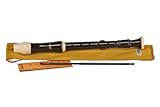
Our top pick for Recorder in the UK is the Yamaha YRS-23 Descant Recorder.
The YRS-23 is the most widely recommended school recorder in the UK by primary music teachers and is the reliable default choice for Key Stage 2 pupils.
Disclosure: As an Amazon Associate I earn from qualifying purchases. This guide contains Amazon affiliate links, and we may earn a commission — at no extra cost to you — but it never changes our rankings.
The recorder holds a unique place in UK music education: it is the only instrument required by the Key Stage 2 national curriculum for pupils aged 7–11 in England and Wales, making it the first instrument millions of British children ever play. Most primary schools issue or request a descant recorder in C, and the standard has been entrenched since the 1950s when the Dolmetsch family helped popularise the instrument in schools. For parents buying for the first time, the vocabulary can be confusing — a descant recorder is the same as a soprano recorder, and the term varies by country, but in UK schools and ABRSM grade syllabi, 'descant' is the accepted name.
Material is the biggest purchasing decision. ABS plastic recorders dominate the school market because they are washable, durable, and largely unaffected by temperature changes — important in cold UK classrooms. Wooden recorders, typically maple or pear, produce a noticeably warmer tone and are preferred for ABRSM Grade 3 and above, but require careful drying after each session to prevent moisture damage. For a child just starting Key Stage 2, plastic is almost always the right choice. The price difference is stark: a reliable plastic descant costs £6–£15, while entry-level wooden instruments start around £35–£55.
For ABRSM Recorder examinations (available at Initial through Grade 8), the instrument must be a descant in C for the lower grades. Tone quality, articulation clarity, and breath control are all assessed from Grade 1 upwards, making it worth investing in a German-fingering instrument with good keywork — the difference between a basic school recorder and a Yamaha or Aulos becomes obvious quickly. Our picks below cover the full range from classroom basics to the first serious step up for a pupil working toward their first ABRSM grade exam.
Buying guide
What should you look for in Recorder?
1Always buy a descant (soprano) recorder in C for UK school and ABRSM work — this is the standard instrument at Key Stage 2 and for Grades Initial through 5. Treble recorders in F are used for higher grades and ensemble playing but are not suitable for beginners.
2German vs. Baroque fingering: most UK school recorders use German fingering (easier for beginners), but ABRSM and many music services prefer Baroque fingering for its more accurate intonation at higher grades. Check which your school or teacher recommends before buying.
3ABS plastic is the practical choice for primary-age children: it can be boiled to sterilise, dropped without cracking, and shared between siblings. Reserve wooden recorders for pupils who are committed to grades and practise daily.
4Always buy a thumb rest and cleaning rod: most decent recorders include both, but check the listing. A cleaning rod and cloth are essential for drying the bore after every session to prevent mould in the warm, damp environment inside the instrument.
5For ABRSM grade work from Grade 3 upwards, a two-piece (head joint + body + foot joint) recorder offers better intonation than a one-piece school instrument. The Mollenhauer Canta is the recommended step-up instrument for pupils progressing through the syllabus.
Our process
How do we choose our picks?
We don’t lab-test products ourselves. We earn a commission if you buy through our links, but that never changes which products we rank.
Published specs
We compare manufacturer specifications so each pick is right for a real budget and use-case.
UK-specific fit
We factor in UK voltage and plug/fitting standards — details that generic global lists miss.
The YRS-23 is the most widely recommended school recorder in the UK by primary music teachers and is the reliable default choice for Key Stage 2 pupils. The Yamaha name guarantees consistent intonation that cheap supermarket alternatives simply cannot match.
Material
ABS plastic
Fingering
German
Pieces
2-piece (head + body/foot)
Key
C (descant)
Includes
Cleaning rod, bag
What we like
+Consistent intonation across all registers — far more accurate than budget school alternatives
+Smooth ABS bore reduces condensation build-up during long practice sessions
+Reliable Yamaha quality control means no dead notes or cracked seams
+Lightweight and compact — fits comfortably in a primary school bag
Worth noting
–German fingering limits progression to ABRSM Grade 3+ without re-learning
–Basic carry bag rather than a hard case offers limited protection
View on Amazon UKAmazon UK shows no offer for this product as of 12 Oct, 01:00 (London time). Details
2
Aulos
Runner-Up
Aulos 205A Descant Recorder
The Aulos 205A is the preferred choice for UK pupils whose teacher recommends Baroque fingering and who are aiming for ABRSM grades. The included hard case and 3-piece body give it a longevity advantage that justifies the marginally higher price over the YRS-23.
Material
ABS resin
Fingering
Baroque
Pieces
3-piece
Key
C (descant)
Includes
Cleaning rod, case
What we like
+Baroque fingering system preferred by ABRSM examiners and serious music teachers
+3-piece construction allows tuning adjustment by pulling out the head joint slightly
+Comes with a hard carry case — unusual at this price and a genuine practical benefit
+Warm tone quality that rivals entry-level wooden recorders
Worth noting
–Baroque fingering is slightly harder to learn initially than German system
–Slightly heavier than the Yamaha YRS-23
£13.49Amazon.co.uk price as of 12 Oct, 01:00 (London time). Details
The Nuvo is the most hygienic recorder on our list and a smart choice for shared school instruments or households where multiple children use the same instrument. The waterproof construction and UK pedigree make it a standout option for Key Stage 2 classrooms.
Material
ABS plastic with silicone keys
Fingering
Baroque
Pieces
3-piece
Key
C (descant)
Includes
Carry bag, cleaning brush
What we like
+Silicone-sealed keywork makes it fully waterproof — dishwasher safe for infection control
+Available in multiple bright colours that appeal to younger Key Stage 2 pupils
+Articulated thumb rest significantly improves hand position for small hands
+UK-designed instrument with strong music education following
Worth noting
–Silicone components can feel slightly spongy compared to traditional ABS recorders
–Less commonly stocked in UK school music shops — availability can be inconsistent
The Angel ARS-201 is a solid, no-frills school recorder at the lowest price point that still delivers reliable intonation. It's ideal for parents who want a disposable-budget backup instrument or for schools buying in class sets.
Material
ABS plastic
Fingering
German
Pieces
2-piece
Key
C (descant)
Includes
Carry bag
What we like
+Most affordable option on this list — ideal as a backup or for school trips
+Reliable ABS construction withstands rough handling by younger pupils
+Consistent tuning across the middle octave where beginners spend most practice time
Worth noting
–German fingering system not recommended for pupils aiming at ABRSM Grade 3+
–Upper register requires more breath precision than the Yamaha or Aulos alternatives
–No hard case included — bag provides minimal protection
No verified retailer listing for this pick — we earn nothing from it.
5
Mollenhauer
MMollenhauer
Mollenhauer Canta Descant Recorder
The Mollenhauer Canta is the go-to step-up recorder for UK pupils who have completed Key Stage 2 and are working through ABRSM grades. The maple tone is in a different league to plastic instruments and will support a student through Grade 5 and beyond.
Material
Maple wood
Fingering
Baroque
Pieces
3-piece
Key
C (descant)
Includes
Pouch, cleaning rod, thumb rest
What we like
+Maple wood construction produces the warm, rounded tone quality required for ABRSM Grade 4–5 examinations
+German-crafted precision — Mollenhauer have been making recorders since 1822
+Voiced head joint produces even tone from low C to high D without shrillness
+The definitive step-up instrument recommended by UK peripatetic music teachers
Worth noting
–Requires drying after every session — UK central heating can crack the wood if stored in a case damp
–Significantly more expensive than plastic alternatives — only worthwhile for committed pupils
No verified retailer listing for this pick — we earn nothing from it.
Product prices and availability are accurate as of 12 Oct, 01:00 (London time) and are subject to change. Any price and availability information displayed on Amazon.co.uk at the time of purchase will apply to the purchase of this product.
Editor's Note
Recorders are non-electronic instruments and do not require UKCA marking. Under the Consumer Rights Act 2015, faulty instruments may be returned within 30 days for a full refund. Plastic recorders (ABS resin) are food-safe and non-toxic, making them suitable for young children. Wooden recorders require more careful maintenance in the UK climate; oil the bore regularly and avoid exposing them to rapid temperature changes. For school use, check that the recorder material meets any requirements specified by your school or local authority regarding instruments shared between pupils.
Our Take
The recorder is the unsung hero of UK primary school music education, and despite its reputation as a noisy nuisance, a decent instrument played well sounds genuinely lovely. Yamaha and Aulos dominate the UK school market for good reason — they are well-tuned, durable, and cheap enough to replace when a seven-year-old inevitably drops one in the playground. Most UK primary schools specify descant recorder in C for Key Stage 2 music; check with your child's school before buying a treble or soprano in a different key. Gear4music sell multipacks for schools at decent discounts.
Questions & answers
Frequently asked questions
What recorder do UK schools use?
The vast majority of UK primary schools use a descant recorder in C, typically made from ABS plastic. The Yamaha YRS-23 and Aulos 205A are the most commonly specified instruments by local authority music services and individual schools. Some schools buy class sets in bulk — if unsure, ask the class teacher before purchasing, as some schools have a preferred model to ensure all pupils use the same fingering system.
What is the difference between a descant and soprano recorder?
They are the same instrument — the name varies by country and tradition. In the UK and in ABRSM grade syllabi, 'descant' is the standard term. In North America and much of Europe, the same instrument is called a 'soprano recorder'. Both refer to the recorder pitched in C that is standard for UK primary school music education and beginner ABRSM examinations.
What is the difference between German and Baroque fingering on a recorder?
German fingering uses a slightly simplified system for the note F that is easier for beginners to learn, but produces less accurate intonation in the upper register. Baroque (or English) fingering uses the original historical fingering system that gives better intonation and is required for ABRSM Grade 3 and above. Most UK music teachers recommend learning Baroque fingering from the start to avoid having to re-learn later, even though it is slightly harder initially.
Can you clean a plastic recorder in the dishwasher?
Most ABS plastic recorders can be rinsed in warm water, but only the Nuvo range is explicitly designed to be fully waterproof and dishwasher-safe. For standard Yamaha or Aulos recorders, disassemble the instrument, rinse with lukewarm water (not boiling), dry thoroughly with the included cleaning rod and cloth, and leave the pieces separated to air-dry before reassembling. Moisture trapped inside is the most common cause of a recorder developing a musty smell.
What ABRSM grades can you take on recorder in the UK?
ABRSM offers recorder examinations from Initial Grade through Grade 8. The descant recorder in C is used for Initial through Grade 5 in most syllabi; treble recorder in F is introduced at higher grades and for ensemble work. Grade 1 requires three pieces, scales, sight-reading, and aural tests. Many UK junior music services and county orchestras accept recorder grades as evidence of musical progression alongside other instruments.
Affiliate disclosure: As an Amazon Associate I earn from qualifying purchases. UKPicks earns a small commission from qualifying purchases made via links on this page. This does not affect our editorial recommendations or the price you pay.