What are the best condenser microphone to buy in the UK?
Our top pick for Condenser Microphone in the UK is the Blue Yeti USB Microphone.
The Blue Yeti is the recommended USB microphone for UK podcasters, streamers, and content creators who want professional audio quality without the complexity of an XLR setup.
Disclosure: As an Amazon Associate I earn from qualifying purchases. This guide contains Amazon affiliate links, and we may earn a commission — at no extra cost to you — but it never changes our rankings.
The UK has seen a significant expansion in home recording, podcasting, and content creation over the past five years, driven by the rise of platforms such as Spotify Podcasts, YouTube, and Patreon, as well as the post-2020 shift to remote working that gave millions of UK professionals a home office where audio quality suddenly mattered. A condenser microphone is the tool of choice for this range of applications — condenser mics are more sensitive and detailed than the dynamic mics used for live stage performance, making them ideal for capturing vocals, acoustic instruments, and spoken word in the controlled environment of a home studio or podcast desk.
For UK buyers, the most important initial decision is USB versus XLR connectivity. A USB microphone (like the Blue Yeti or Rode NT-USB+) connects directly to a Mac or PC with no additional equipment — it is a complete solution for podcasting, voiceover, and streaming. An XLR microphone (like the AKG P120) requires an audio interface (a separate device that converts the analogue XLR signal to a digital USB signal for the computer) but offers higher audio quality, lower noise floor, and compatibility with professional recording equipment. For beginners, USB is the practical starting point; for musicians recording instruments or wanting to grow into professional audio production, XLR with an audio interface is the better long-term investment.
A consideration specific to UK homes is acoustic treatment. British houses are typically reflective — hard plaster walls, wooden floors, and rectangular rooms create reverb that condenser microphones (being highly sensitive) will capture clearly. A duvet, heavy curtains, or a dedicated recording reflection filter (available from £25–£50) will dramatically improve home recordings before any microphone upgrade becomes worthwhile. The best microphone in the world sounds poor in an untreated Victorian terraced living room.
Buying guide
What should you look for in Condenser Microphone?
1USB vs XLR: if you only need one microphone for podcasting, video calls, streaming, or basic voice recording, buy a USB microphone (Blue Yeti, Rode NT-USB+). If you want to record multiple instruments, use multiple microphones, or grow into professional audio production, buy an XLR microphone and a Focusrite Scarlett 2i2 audio interface alongside it.
2Phantom power (+48V): all XLR condenser microphones require phantom power — a 48-volt power supply provided by the audio interface or mixer. Check that your audio interface supplies phantom power (all modern interfaces do, including the Focusrite Scarlett 2i2) before buying an XLR condenser mic.
3Cardioid vs omnidirectional patterns: all four microphones on this list are primarily cardioid (front-facing, rejects sound from the rear). This is correct for solo podcasting, voiceover, and single-instrument recording in a UK bedroom. Omnidirectional patterns (which capture sound from all directions equally) are used for room recording and group discussions — not recommended for untreated UK home spaces.
4Acoustic treatment matters more than microphone quality: before upgrading your microphone, address the room. Record in a wardrobe full of clothes, a corner with a heavy curtain behind you, or use a reflection filter on a mic stand. A budget condenser in a treated UK bedroom will outperform a much more expensive mic in a bare plaster room.
5Shock mount and pop filter: most condenser microphones benefit from a shock mount (isolates the mic from desk vibrations) and a pop filter (reduces plosive sounds from P and B consonants in voiceover). Budget £15–£25 for these accessories separately, or buy a bundle that includes them.
Our process
How do we choose our picks?
We don’t lab-test products ourselves. We earn a commission if you buy through our links, but that never changes which products we rank.
Published specs
We compare manufacturer specifications so each pick is right for a real budget and use-case.
UK-specific fit
We factor in UK voltage and plug/fitting standards — details that generic global lists miss.
The Blue Yeti is the recommended USB microphone for UK podcasters, streamers, and content creators who want professional audio quality without the complexity of an XLR setup. The four polar patterns and on-mic controls make it more versatile than any other USB microphone at this price.
+USB plug-and-play — no audio interface required, works immediately with any UK Mac or PC
+Four selectable polar patterns cover a wide range of recording scenarios
+On-mic gain control and mute button are genuinely useful for live streaming and podcast recording
Worth noting
–Heavy and large — the included desk stand takes significant desk space in a typical UK home office
–USB connection limits it to computer-only use — cannot be used with a mixing desk or traditional studio setup
View on Amazon UKAmazon UK shows no offer for this product as of 12 Oct, 07:00 (London time). Details
2
Rode
Best Quality
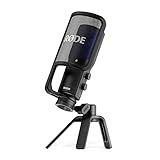
Rode NT-USB+ Condenser Microphone
The Rode NT-USB+ is the best USB microphone for UK musicians and serious podcasters who want broadcast-quality audio without an audio interface. The 24-bit recording and zero-latency monitoring are genuine advantages over the Blue Yeti, and Rode's build quality is noticeably superior to Blue at this price point.
Type
Condenser, cardioid
Connectivity
USB-C (and USB-A with adaptor)
Sample Rate
48kHz/24-bit
Headphone Monitoring
Zero-latency via 3.5mm output
Includes
Desk stand, USB-C cable, ring mount
What we like
+24-bit recording at 48kHz — higher resolution than the Blue Yeti for discernible audio quality improvement
+Zero-latency headphone monitoring output on the microphone itself — hear yourself in real time without software delay
+Rode is an Australian brand with a strong UK following and excellent UK warranty support
+USB-C connection with power delivery compatibility — works with modern MacBooks and iPads without an adaptor
Worth noting
–The ring mount design is less universal than a standard thread mount for third-party boom arms
£139.00Amazon.co.uk price as of 12 Oct, 07:00 (London time). Details
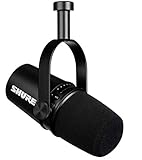
The Shure MV7 is the recommended microphone for UK podcasters and speakers who prioritise voice clarity over instrument recording versatility.
Type
Dynamic (USB + XLR dual output)
Connectivity
USB-C and XLR simultaneously
Frequency Response
50Hz–16kHz
Touch Controls
On-mic gain, mute, headphone monitoring
Includes
USB-C cable, desk stand
What we like
+Dual USB/XLR output allows starting with USB and upgrading to XLR setup later without buying a new microphone
+Dynamic capsule (not condenser) is more forgiving in untreated UK rooms — rejects more room noise
+ShurePlus MOTIV app (free iOS/Android) provides EQ, compression, and limiting
+Shure's reputation for broadcast durability is unmatched — the MV7 is built to last decades
Worth noting
–Dynamic capsule captures less detail than condenser alternatives — less suitable for acoustic instrument recording
–Frequency response rolls off above 16kHz — not ideal for music production that requires full-range capture
View on Amazon UKAmazon UK shows no offer for this product as of 12 Oct, 07:00 (London time). Details
4
AKG
AAKG
AKG P120 High-Performance Condenser Microphone
The AKG P120 is the recommended XLR condenser for UK home studio builders who want a shock mount included and more flexibility for louder sound sources. The -20dB pad and bass roll-off switches give it useful range across different recording sources, making it a sensible long-term purchase for producers who record diverse material.
Type
Condenser, cardioid
Connectivity
XLR
Frequency Response
20Hz–20kHz
SPL Handling
155dB max
Includes
Shock mount, stand adapter, dust cover
What we like
+Shock mount included — AKG is one of the few microphones in this bracket to include this genuinely useful accessory
+155dB SPL handling is the highest on this list — handles loud guitar amps, drums, and brass instruments without distortion
+AKG is a Vienna-based professional audio brand (now owned by Samsung/Harman) with pro studio heritage
+Three-position bass roll-off and -20dB pad switches give useful flexibility for different recording sources
Worth noting
–Self-noise is on the higher side for a studio condenser — marginally less suitable for very quiet sources like solo acoustic guitar
Product prices and availability are accurate as of 12 Oct, 07:00 (London time) and are subject to change. Any price and availability information displayed on Amazon.co.uk at the time of purchase will apply to the purchase of this product.
Editor's Note
Condenser microphones requiring phantom power (48V) should be used only with compatible audio interfaces or mixers; applying phantom power incorrectly can damage ribbon microphones. USB-powered condenser microphones must carry UKCA marking as powered electronic devices sold in the UK. Under the Consumer Rights Act 2015, faulty microphones may be returned within 30 days for a full refund. Manufacturer warranties typically cover two years for defects in materials and workmanship. XLR cables are not regulated but should carry appropriate CE or UKCA markings if they include active components.
Our Take
The UK home recording scene has exploded, and a decent condenser microphone is the single biggest upgrade most beginners can make to their sound. Forget the cheap USB microphones marketed at podcasters — an XLR condenser through even a budget interface will sound dramatically better. Andertons and Gear4music both carry solid options with next-day UK delivery. One thing UK buyers consistently overlook: room acoustics matter more than microphone price. A budget condenser in a treated room will outperform a far more expensive one in an untreated bedroom every time.
Questions & answers
Frequently asked questions
Do I need phantom power for a condenser microphone in the UK?
Yes — all XLR condenser microphones require phantom power (+48V), which is supplied by the audio interface or mixing desk. All modern audio interfaces sold in the UK (including the Focusrite Scarlett 2i2, Universal Audio Volt 2, and SSL 2+) provide phantom power via a button labelled '48V'. USB condenser microphones like the Blue Yeti and Rode NT-USB+ receive their power via the USB connection and do not require external phantom power. Dynamic microphones like the Shure MV7 also do not require phantom power.
How do I record a condenser microphone in a UK home without a studio?
The key is acoustic treatment rather than expensive equipment. Record inside a wardrobe full of clothing — the clothes absorb reflections and the small enclosed space reduces room reverb. Alternatively, use a reflection filter on a boom arm (widely available on Amazon UK) which sits behind the microphone and absorbs rear reflections. Heavy curtains closed behind the speaker reduce flutter echo from windows. Even simple measures like recording at a corner of the room (where surfaces meet) can significantly reduce the hollow room sound common in UK homes with bare plaster walls.
Is an XLR or USB microphone better for UK beginners?
For most UK beginners — podcasters, streamers, video conference users, and bedroom vocalists — a USB microphone is the better starting point. It requires no additional equipment, works immediately, and produces professional results. XLR microphones require an audio interface (adding £50–£150 to the setup cost) but offer lower noise floors, higher quality conversion, and compatibility with professional equipment. The recommended progression is: start with a USB microphone (Blue Yeti or Rode NT-USB+), then move to XLR with a Focusrite Scarlett 2i2 once you are producing audio regularly and want to improve further.
Can I use a condenser microphone for ASMR and voiceover work in the UK?
Yes — condenser microphones are preferred for ASMR because their high sensitivity captures very quiet sounds (tapping, whispering, fabric sounds) that dynamic microphones cannot reproduce clearly. The Rode NT-USB+ is a popular choice among UK ASMR creators. For ASMR specifically, the most important factor is the acoustic treatment of the recording space — condenser mics will capture every creak, noise from outside, and room reflection equally, so a treated space is essential. Many UK ASMR creators record inside a sound booth or under a duvet to control their environment.
Affiliate disclosure: As an Amazon Associate I earn from qualifying purchases. UKPicks earns a small commission from qualifying purchases made via links on this page. This does not affect our editorial recommendations or the price you pay.