UK Buying Guides
Best Appliances in the UK
8 expert guides — researched from UK Amazon listings, updated for 2026
Large appliances are long commitments, so we research models on reliability, repair costs and running noise. In the UK, energy use is shown on the rescaled A to G label, and a quiet, efficient B-rated machine often beats a louder one that costs more to run over a decade. Typical spends: £250 to £600 for mid-range, £600 to £1,200 for premium. All should be UKCA or CE marked and carry the WEEE recycling symbol. The mistake people make most is buying on upfront price without reading the energy label, then paying the difference back many times over on bills across the appliance's life.
 6 picks
Air Fryer Ovens
Best Air Fryer Ovens in the UK 2026
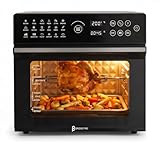
Air fryer ovens — larger countertop units with a door rather than a drawer basket — have become popular in UK kitchens for their ability to cook whole chickens, large batches and multiple dishes simultaneously. Unlike compact basket air fryers, oven-style models typically offer 20–36 litres of capacity with multiple shelf positions, rotisserie functions and the ability to replace a conventional oven for everyday cooking. The UK market is well-served by both established brands like Breville and newer entrants from specialist air fryer manufacturers. Key specs to compare are capacity (30L+ suits a family of four), wattage (1800W is standard; 2400W heats faster but draws more power), preset modes, and what accessories are included. All models below are countertop, available on Amazon UK and priced under £200.
 6 picks
Built-In Ovens
Best Built-In Ovens in the UK 2026
Built-in single electric ovens are the standard choice for UK kitchen refurbishments — they slot into a standard 60 cm wide housing unit and are available from budget to premium across a wide range of retailers. Fan-assisted (fan oven) models are now the default: they distribute heat more evenly than conventional ovens, cook faster, and allow multi-shelf baking without flavour transfer. The UK market is dominated by 60–70 litre cavities — 60L suits smaller households while 70L is better for families who batch-cook or bake. All standard UK built-in ovens are 600 mm wide and fit a 595 mm aperture; measure cavity depth carefully as this varies. A energy rating is now achievable at mid-range prices, and steam-clean functions are increasingly common as a practical alternative to pyrolytic cleaning. Check aperture dimensions carefully — fitting to British Standard BS EN 60350 is required for all UK electric ovens.
 6 picks
Dehumidifiers
Best Dehumidifiers in the UK 2026
Damp is a persistent problem in British homes. Victorian and Edwardian terraces, purpose-built flats and even newer builds suffer from condensation, rising damp and penetrating moisture — accelerated by the UK's consistently humid, cool climate. A dehumidifier extracts moisture from the air before it settles on cold walls and windows to form condensation mould. The key metric is extraction rate in litres per day, measured at a standard 30°C/80% relative humidity — real-world UK extraction in cooler rooms will be lower, typically 30–50% of the stated rate. For a standard UK bedroom or living room, 10–12 litres per day is sufficient; larger spaces like basements, garages or whole-house damp problems need 20L+ or a model with a continuous drain hose. Compressor dehumidifiers (the most common type) work best at temperatures above 15°C — for cold UK garages and loft spaces in winter, a desiccant dehumidifier performs more reliably.
 5 picks
Dishwashers
Best Dishwashers in the UK 2026
A dishwasher is one of the most practical kitchen appliances for UK households — saving an average of 100 litres of water per week compared to hand-washing. The key specs to compare are place settings (a standard UK family of four needs at least 13), energy rating under the UK's revised A–G scale (lower letters mean lower running costs), noise level in decibels (anything under 44 dB is considered quiet for a UK kitchen), and programme variety. Most UK kitchens use standard 60 cm width freestanding dishwashers — integrated models save bench space but cost more and limit switching brands. Look for an auto door-open drying function, which improves drying performance without extra heating, and an Eco programme for everyday loads. Under the Consumer Rights Act 2015, your statutory rights run for six years regardless of the manufacturer's stated guarantee.
 6 picks
Induction Hobs
Best Induction Hobs in the UK 2026
Induction hobs are now the default upgrade for UK kitchens: they heat 35–50% faster than gas, waste almost no energy heating the surrounding air, and cool instantly when you lift the pan — making them far safer around children. The UK market splits into two clear categories: built-in 60cm hobs that replace your existing cooktop and require a dedicated 32A circuit, and portable plug-in models that run from a standard 13A socket — no electrician required. Built-in models from Bosch, Siemens, and Neff dominate the premium end, offering PowerBoost, FlexZones, and CombiZone features that serious cooks demand. Portable hobs from Tefal, VonShef, and AMZCHEF serve renters, students, and anyone wanting a second cooking zone. UK-specific considerations matter here: check for UKCA or CE marking, confirm your existing wiring meets Part P requirements before a built-in install, and verify your cookware is ferrous — a magnet test takes three seconds and saves a return.
 6 picks
Microwaves
Best Microwaves in the UK 2026
The UK microwave market splits cleanly into three tiers: solo microwaves for basic reheating and defrosting (the most common UK purchase), grill microwaves that add a browning element for toasted food and gratin dishes, and combination microwaves that include convection heating to function as a mini oven. Most UK households use a microwave primarily for reheating and defrosting, making a 700–900W solo model in the 20–25 litre range the practical choice. Combination microwaves suit buyers who want to reduce counter clutter or don't have a full oven. Capacity is measured in litres — check the turntable diameter too, as a 28 cm plate won't fit in a 25 cm turntable. All models below carry UKCA or CE certification and are sold through Amazon UK with UK plug and warranty.
 6 picks
Tumble Dryers
Best Tumble Dryers in the UK 2026
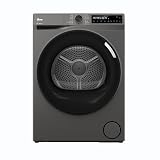
A tumble dryer is near-essential in the UK — the climate makes outdoor drying unreliable for most of the year. The biggest decision is type: heat pump dryers are significantly more energy efficient than condenser or vented models, using 50–70% less electricity per cycle, but cost more upfront. Given the UK's energy prices (above 24p/kWh), heat pump models typically recover their price premium within 2–3 years of regular use. Condenser dryers are cheaper to buy and require no external vent, making them practical for UK flats and houses without a utility room. Vented models are the least expensive but need a permanent vent to the outside — less common in modern UK homes. Capacity of 8–9 kg suits most households; 10 kg models handle duvets and large family loads without multiple cycles. All models below carry UKCA or CE certification for the UK market.
 6 picks
Washing Machines
Best Washing Machines in the UK 2026
Choosing the right washing machine for a UK home involves weighing drum capacity against energy efficiency, noise levels (vital in flats or open-plan kitchens) and the range of programmes available. The UK's revised energy labelling system — introduced in March 2021 — now rates appliances from A to G, making it easier to compare running costs. A typical household runs four to five washes per week, so even a one-grade energy improvement can save a noticeable amount on annual electricity bills. For families, a 9–10 kg drum handles bulky duvets and school uniforms in one go, while couples and singles are well served by 7–8 kg machines. Look for 1400 rpm spin speed to reduce drying time — especially important in the UK's damp climate — and an inverter motor for quieter, more durable operation. All models below are freestanding, widely available on Amazon UK and carry current UKCA or CE certification.