Disclosure: As an Amazon Associate I earn from qualifying purchases. This guide contains Amazon affiliate links, and we may earn a commission — at no extra cost to you — but it never changes our rankings.
Seventy-five inches is the point where the room starts making the decision instead of the spec sheet. A screen this size wants roughly 2.8–3.8 metres of viewing distance to sit comfortably in the field of view, and a great many British living rooms — particularly in terraced houses and flats — simply do not have that depth. Measure from the sofa to the TV wall before anything else, then measure the width of the unit the set will stand on, because a 75-inch TV's feet are often set far wider than a 55-inch model's. Once the room is settled, the market splits cleanly. Quantum Dot QLED panels dominate this size in the UK, mini-LED sits above them with far finer control of local dimming, and conventional LED sits below both, with no Quantum Dot layer and no fine-grained local dimming. Gaming is the other divider: two picks here publish 144Hz refresh rates, and only one publishes HDMI 2.1 ports, which is what a PS5 or Xbox Series X actually needs to drive high frame rates at 4K. And because a screen this big will be on for hours in a UK sitting room, the energy label class stops being a footnote — at 75 inches the difference between classes is a real number on the bill.
Buying guide
What should you look for in 75 Inch TVs?
1Measure before you buy: 75 inches wants roughly 2.8–3.8 metres of viewing distance, which many UK terraced-house sitting rooms do not have — a 65-inch set in the right position beats a 75-inch one you sit too close to.
2Check the stand as well as the screen. The feet on a 75-inch set are often placed near the corners, so a standard UK TV unit can be too narrow.
3A 75-inch box is a two-person carry and will not go round a tight stairwell turn on its own — plan the route from the front door to the wall before the delivery slot arrives.
4For PS5 or Xbox Series X, look for a published HDMI 2.1 port and a refresh rate above 60Hz.
5HDR formats do not overlap: Dolby Vision and HDR10+ both do dynamic, scene-by-scene tone mapping but come from different camps, so check which one the streaming services you use actually deliver.
6At this screen size the energy label class matters. A 75-inch panel left on for several hours a night is a meaningful load, and the A–G class is the only comparable efficiency figure UK retailers must publish.
Our process
How do we choose our picks?
We don’t lab-test products ourselves. Instead we synthesise current Amazon UK listings and published specs into clear, honest recommendations. We earn a commission if you buy through our links, but that never changes which products we rank.
Current UK availability
We check each pick against live Amazon UK catalogue data rather than last year’s model lists. Stock moves fast, so a listing can sell out after we publish.
Published specs
We compare manufacturer specifications so each pick is right for a real budget and use-case.
UK-specific fit
We factor in UK voltage and plug/fitting standards — details that generic global lists miss.
Full-array local dimming, 144Hz gaming, a built-in subwoofer and Freely.
Screen Size
75 inches
Resolution
3840 × 2160 (4K QLED)
Hdr
Dolby Vision IQ, HDR10, HDR10+ Adaptive
Smart Os
VIDAA U7.6 with Freely and Alexa built in
Refresh Rate
144Hz
Audio
50W 2.1 with built-in subwoofer, Dolby Atmos, DTS Virtual:X
What we like
+144Hz panel with VRR, ALLM, FreeSync Premium and a Game Bar, plus two full HDMI 2.1 ports for current consoles
+Quantum Dot colour with full-array local dimming
+A 50W 2.1 speaker system with a built-in subwoofer, so it has real bass before you add a soundbar
+Freely plus the full UK catch-up set — iPlayer, ITVX, All 4, My5, UKTV and Britbox — with no aerial required
Worth noting
–A 2024 model, so it has been on sale longer than the 2025 and 2026 model-year sets elsewhere in this guide
–The 144Hz panel only pays off with an HDMI 2.1 source — an older console or laptop will not use it
View on Amazon UKAmazon UK shows no offer for this product as of 12 Oct, 07:00 (London time). Details
Product prices and availability are accurate as of 12 Oct, 07:00 (London time) and are subject to change. Any price and availability information displayed on Amazon.co.uk at the time of purchase will apply to the purchase of this product.
Advertisement
Amazon Prime free trial
Disclosure: Amazon pays us a fixed fee if you start a Prime free trial through this link, even if you never buy anything. It does not change the price of your membership, and never affects what we recommend or how we rank it.
Amazon Prime includes one-day delivery on eligible items and access to Prime Video. Eligible new members can start a 30-day free trial. The trial becomes a paid monthly membership when it ends unless you cancel first — Amazon shows the current price on the sign-up page.
The Amazon Ember 75-inch is the picture-quality answer rather than the value one — it is the only mini-LED set here, with 960 dimming zones and a quoted peak brightness of up to 1400 nits, which is a different class of contrast control from any edge-lit or standard full-array panel. Everything else in this guide is a variation on a well-made 4K panel with a good processor, and at this size that is genuinely enough for most households.
Our Take
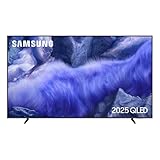
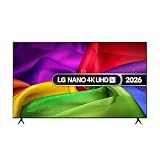
At 75 inches the honest advice is to spend on contrast control rather than on brand. The Amazon Ember is the one to buy if picture quality is the whole point — mini-LED with 960 zones does things a standard panel cannot. Everything else is about which interface you want to live with: Tizen on the Samsung, webOS on the LG, Titan OS on the Philips, Fire TV on the TCL.
Questions & answers
Frequently asked questions
How far should you sit from a 75-inch TV?
Roughly 2.8–3.8 metres, using the common guideline of 1.5–2 times the screen diagonal. Closer than about 2.5 metres and you start turning your head to follow the action and noticing panel structure on lower-quality sources; further than about 4 metres and you lose the immersion you paid for. Measure the sofa-to-wall distance in your own room before committing, because that number decides between 65 and 75 inches more reliably than any spec.
Is a 75-inch TV too big for a UK living room?
It depends on room depth rather than floor area. A typical UK through-lounge or knocked-through kitchen-diner at 4 metres or more takes a 75-inch screen comfortably. A standard terraced front room, where the sofa often sits 2.5 metres from the chimney breast, is usually better served by 65 inches. The other constraint is the TV unit: 75-inch feet are frequently set wider than a 55-inch set's, so check the stand width against your furniture.
Which 75-inch TV is best for PS5 and Xbox gaming?
The Amazon Ember 75-inch publishes a 144Hz gaming mode with AMD FreeSync Premium Pro certification. The LG offers Game Optimiser and VRR but publishes a 60Hz panel.
What is the difference between QLED and mini-LED at 75 inches?
QLED describes the Quantum Dot colour layer, which widens the colour range and lifts brightness. Mini-LED describes the backlight: thousands of much smaller LEDs grouped into many independently controlled dimming zones. The Amazon Ember pick here is the only mini-LED set in this guide and publishes 960 dimming zones, which allows far finer control of local contrast than a conventional backlight. A set can be both, and that one is.
Can you watch live UK TV on a 75-inch smart TV without an aerial?
Yes, if it has Freely.
Affiliate disclosure: As an Amazon Associate I earn from qualifying purchases. UKPicks earns a small commission from qualifying purchases made via links on this page. This does not affect our editorial recommendations or the price you pay.