BBy Bikram Nath·Researched from UK Amazon listings·Updated 2026-07-10·6 products compared
What are the best mini fridges to buy in the UK?
Our top pick for Mini Fridges in the UK is the WELLENT 46L Table Top Mini Fridge with Adjustable Thermostat.
For UK students, office workers, and bedroom users who need a compact, quiet cooler, the WELLENT 46L is the most practical pick — its adjustable thermostat, lightweight build, and versatile heating mode make it a dependable all-rounder for small spaces.
Disclosure: As an Amazon Associate I earn from qualifying purchases. This guide contains Amazon affiliate links, and we may earn a commission — at no extra cost to you — but it never changes our rankings.
Mini fridges are one of the fastest-growing appliance categories in the UK, driven by student accommodation, rented rooms, home bars, and bedroom skincare routines. Unlike full under-counter fridges, mini fridges typically run 6–50L, sit on a surface rather than fitting into a worktop gap, and are often designed for portability using both AC mains (240V UK plug) and DC car adapters. UK buyers most commonly need mini fridges for bedrooms in shared houses, university halls of residence, home offices, garden rooms, and caravans. Noise levels matter significantly — most bedroom mini fridges should operate under 40dB to avoid disturbing sleep. This guide covers the best mini fridges available on Amazon UK in 2026, from ultra-compact 6L thermoelectric coolers to practical 46L tabletop units.
Buying guide
What should you look for in Mini Fridges?
1Choose compressor over thermoelectric for long-term use — thermoelectric mini fridges (Peltier-based) are cheaper and quieter but only cool 15–20°C below ambient; compressor models reach true fridge temperatures regardless of room heat
2Check voltage compatibility — all UK mini fridges should come with a 240V UK plug; models also offering a 12V DC adapter work in cars, caravans, and UK motorhomes
3Consider placement noise — thermoelectric models are virtually silent but less effective; compressor models maintain better cold but may have a faint compressor hum at 35–45dB
4Check internal capacity realistically — a 6L mini fridge holds 8 cans or a few skincare products; 20–25L suits a typical student room grocery top-up; 46L is more like a proper under-counter fridge
5Look for cooler AND warmer dual function if you want flexibility — many UK mini fridge models heat to 65°C as well as cool, useful for packed lunches or office snacks
Our process
How do we choose our picks?
We don’t lab-test products ourselves. Instead we synthesise the strongest independent evidence — current Amazon UK listings, verified-buyer feedback, published specs and UK pricing — into clear, honest recommendations. We earn a commission if you buy through our links, but that never changes which products we rank.
Current UK availability
We only shortlist products actively listed and in stock on Amazon UK, checked against live catalogue data — not last year’s models.
Publicly visible buyer feedback
We look at how each product is received by UK shoppers — its overall rating standing and the praise or complaints that recur in public reviews — rather than relying on a single reviewer’s opinion.
Published specs & value
We compare manufacturer specifications, typical UK price bands, warranty and running costs so each pick is right for a real budget and use-case.
UK-specific fit
We factor in UK voltage, plug/fitting standards, CE/UKCA marking and Consumer Rights Act cover — details that generic global lists miss.
Product prices and availability are accurate as of 19 Sept, 19:00 (London time) and are subject to change. Any price and availability information displayed on Amazon.co.uk at the time of purchase will apply to the purchase of this product.
Editor's Note
Mini fridge demand in the UK spiked notably during 2024–2025 driven by the skincare fridge trend (keeping serums and creams at 4–8°C), student accommodation shortages where room-size storage is at a premium, and the rise of UK home bars and garden rooms. Thermoelectric mini fridges are quiet but not true fridges — they cool to 15–20°C below ambient, which in a warm UK summer may only reach 15°C. For food safety, the NHS recommends keeping perishables below 5°C; only compressor models reliably achieve this. For skincare, 12–15°C is adequate. UK buyers in university accommodation should check their hall's energy policies — some UK universities restrict mini fridges above a certain wattage.
Our Take
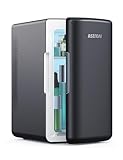
UK kitchen layouts favour integrated or slim fridge-freezers — American-style units don't fit most kitchens. The WELLENT 46L Table Top Mini Fridge with Adjustable Thermostat is our top recommendation. If that's out of budget, the AstroAI Mini Fridge 6L / 8 Can Cooler & Warmer — Black offers solid performance at a lower price point. The MoraRise Mini Fridge 22L/30 Cans Portable Cooler & Warmer is worth considering if you want a step up in build quality or features. Avoid the cheapest unbranded options on Amazon UK — they rarely survive past six months of regular use and UK consumer protection only helps if the seller is still trading.
Questions & answers
Frequently asked questions
What is the best mini fridge for a UK student bedroom?
The WELLENT 46L is best if you want real fridge-level food storage. For a compact drinks/snack fridge, the AstroAI 6L is quiet, cheap, and fits on a desk. UK halls of residence often have wattage restrictions — check before buying a compressor-based model.
Are mini fridges expensive to run in the UK?
No — a 6–15L thermoelectric mini fridge typically uses 40–60W, costing roughly £3–6 per month on UK electricity tariffs. A 46L compressor mini fridge uses more but is still well under £15/month. They are among the cheapest appliances to run in a UK household.
Can I use a mini fridge in my UK bedroom?
Yes. Most thermoelectric mini fridges operate at 35–40dB — quieter than a typical UK conversation. Compressor models may emit a slight hum at 40–45dB. Check the dB rating before buying if noise is a concern. Ensure the fridge has adequate ventilation — don't enclose it in a cabinet.
Affiliate disclosure: As an Amazon Associate I earn from qualifying purchases. UKPicks earns a small commission from qualifying purchases made via links on this page. This does not affect our editorial recommendations or the price you pay.