UK Head-to-Head · Water Filters
Brita Marella vs ZeroWater 10-Cup: Which Water Filter Pitcher Is Best for UK Tap Water?
The short answer
The Brita Marella is the better everyday water filter for most UK households — it improves taste at a fraction of ZeroWater's running cost, especially in hard water areas.
Best on features
ZeroWater 10-Cup Pitcher (2.4L)
Best on value
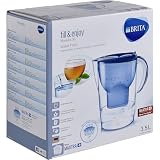
Brita Marella XL (3.5L)
Disclosure: As an Amazon Associate I earn from qualifying purchases. This comparison contains Amazon affiliate links, and we may earn a commission — but it never changes our verdict.
Brita and ZeroWater are the two dominant water filter pitcher brands in the UK, and they take fundamentally different approaches to filtration. The Brita Marella uses MAXTRA PRO filters with activated carbon and ion exchange resin to reduce chlorine, limescale, and some heavy metals — improving taste while keeping beneficial minerals. ZeroWater uses a 5-stage ion exchange filter that removes virtually all dissolved solids, producing water with a TDS (Total Dissolved Solids) reading of 000 — essentially laboratory-grade pure water from your kitchen tap. UK tap water is safe to drink everywhere, but water hardness varies dramatically by region: London and the South East have very hard water (300+ mg/l), while Scotland and the North West have naturally soft water (under 100 mg/l). This regional difference matters because it directly affects filter lifespan and running costs. This comparison covers everything UK buyers need to know, from filtration performance to the real cost of replacement filters in your specific water area.
Specs Comparison
| Spec | Brita Marella XL (3.5L) | ZeroWater 10-Cup Pitcher (2.4L) |
|---|---|---|
| Capacity | 3.5L total (2.0L filtered) (winner) | 2.4L total (1.4L filtered) |
| Filter Type | MAXTRA PRO All-in-1 | 5-Stage Ion Exchange (winner) |
| Filtration Stages | 2 (activated carbon + ion exchange) | 5 (activated carbon, ion exchange, multiple layers) (winner) |
| TDS Reduction | Partial (reduces chlorine, metals, limescale) | Total (000 TDS — removes virtually all dissolved solids) (winner) |
| Filter Life | ~4 weeks / 150L (winner) | 2-8 weeks (varies with water hardness) |
| Monthly Cost | — (winner) | £10.50–£21+ (depends on water hardness) |
| Flow Rate | Fast (60-90 seconds per glass) (winner) | Slow (2-3 minutes per glass) |
Pros & Cons
Brita Marella XL (3.5L)
Pros
- Much lower running costs — approximately £5.50/month regardless of water hardness
- Fast flow rate — fills a glass in about 60-90 seconds
- Retains beneficial minerals (calcium, magnesium) while removing chlorine taste
- Filters available in every UK supermarket — never caught without a replacement
Cons
- Does not remove all dissolved solids — limescale still builds up in kettles over time
- No TDS meter included — you have to estimate when to change the filter
- Less effective at removing fluoride and certain heavy metals
ZeroWater 10-Cup Pitcher (2.4L)
Pros
- Removes virtually all dissolved solids — produces 000 TDS pure water
- Included TDS meter lets you test your tap water and know exactly when to change the filter
- Eliminates limescale completely — extends kettle and appliance lifespan
- NSF-certified to reduce lead, chromium, and PFOA/PFOS
Cons
- Filters exhaust quickly in hard water areas such as London, pushing up running costs
- Slow filtration speed — impractical for filling multiple glasses quickly
- Removes all minerals including beneficial calcium and magnesium
- Smaller filtered capacity (1.4L vs Brita's 2.0L)
Our Verdict
The Brita Marella is the better everyday water filter for most UK households — it improves taste at a fraction of ZeroWater's running cost, especially in hard water areas. The ZeroWater 10-Cup is the better choice for UK buyers in soft water areas or those who need zero-TDS water for appliances, aquariums, or specific health requirements. For London and South East England (hard water), Brita is the clear winner on running costs.
Best for Budget
Brita Marella XL (3.5L)
Best for Features
ZeroWater 10-Cup Pitcher (2.4L)
Our process
How do we choose our picks?
We don’t lab-test products ourselves. Instead we synthesise the strongest independent evidence — current Amazon UK listings, verified-buyer feedback, published specs and UK pricing — into clear, honest recommendations. We earn a commission if you buy through our links, but that never changes which products we rank.
Current UK availability
We check each pick against live Amazon UK catalogue data rather than last year’s model lists. Stock moves fast, so a listing can sell out after we publish.
Publicly visible buyer feedback
We look at how each product is received by UK shoppers — its overall rating standing and the praise or complaints that recur in public reviews — rather than relying on a single reviewer’s opinion.
Published specs & value
We compare manufacturer specifications, typical UK price bands, warranty and running costs so each pick is right for a real budget and use-case.
UK-specific fit
We factor in UK voltage, plug/fitting standards, CE/UKCA marking and Consumer Rights Act cover — details that generic global lists miss.
More about our standards on the About page.
Buying Guide
- 1Check your local water hardness first. UK water hardness varies from under 50 mg/l in the Scottish Highlands to over 350 mg/l in London and Kent. ZeroWater filters exhaust much faster in hard water areas — a filter that lasts 8 weeks in Edinburgh may last only 2-3 weeks in London. Brita filters are less affected by hardness because they do not attempt to remove all dissolved solids. Check your water company's website for your area's hardness reading.
- 2Decide what you want filtered out. Brita reduces chlorine taste, limescale, and some metals — the water tastes noticeably better but retains minerals like calcium and magnesium. ZeroWater removes virtually everything, producing ultra-pure water that tastes flat to some people but eliminates all limescale, fluoride, and heavy metals. If your main complaint is chlorine taste, Brita is sufficient. If you want zero limescale in your kettle, ZeroWater delivers.
- 3Calculate running costs for your area. Brita MAXTRA PRO filters cost approximately £5-6 each (in multipacks) and last roughly 4 weeks regardless of water hardness. ZeroWater filters cost around £10-12 each and last 2-8 weeks depending on your water hardness. In London, ZeroWater replacement costs can reach around £20-25/month — 3-4x the cost of Brita. In soft water areas like Scotland, costs are comparable.
- 4Consider flow rate. Brita filters fill a glass in about 60-90 seconds. ZeroWater's 5-stage filtration is slower — expect 2-3 minutes per glass when the filter is new, increasing as the filter ages. If you frequently fill a glass directly from the pitcher, Brita's faster flow is more practical for busy kitchens.
- 5Think about what you use filtered water for. If you mainly want better-tasting drinking water and tea, Brita is more than adequate and costs less to run. If you use filtered water in a steam iron, humidifier, or CPAP machine where limescale causes damage, ZeroWater's total dissolved solids removal is genuinely useful and can save you replacing appliances.
Editor's Note
For most UK households, the Brita Marella is the better everyday water filter pitcher. It improves taste, reduces chlorine, and costs significantly less to run — especially in hard water areas where ZeroWater filter replacement costs can become surprisingly expensive. ZeroWater is a specialist product that makes most sense in two scenarios: soft water areas (Scotland, North West England) where filters last longer and costs stay reasonable, or specific use cases where zero TDS water matters (steam irons, humidifiers, aquariums). The included TDS meter with ZeroWater is genuinely useful — it helps you verify when filters need replacing rather than guessing. UK tap water is already safe and well-regulated; both filters improve taste rather than safety. If limescale buildup in your kettle is your main frustration, a kettle descaler sachet (50p from any supermarket) is cheaper than either filter system.
Our Take
For most UK households drinking tea and coffee, the Brita Marella is the practical winner — it filters fast, the cartridges are available at every Tesco and Sainsbury's, and the taste improvement is immediately noticeable. ZeroWater produces objectively purer water (the included TDS meter proves it), but the filters clog faster in hard water areas like London and cost about twice as much per litre filtered. If you're in a soft water area like Scotland or the Lake District, neither filter makes enough difference to justify the ongoing cost.
Honourable Mentions
Questions & answers
Frequently asked questions
Is ZeroWater better than Brita UK?
How long do ZeroWater filters last in hard water areas UK?
Do you need a water filter in the UK?
Further Reading
Affiliate disclosure: As an Amazon Associate I earn from qualifying purchases. This comparison contains affiliate links. If you purchase via our links, UKPicks may earn a commission at no extra cost to you. This does not influence our rankings.